
February-March (Krishna Paksha Chaturdashi of Phalguna)
Maha Shivaratri
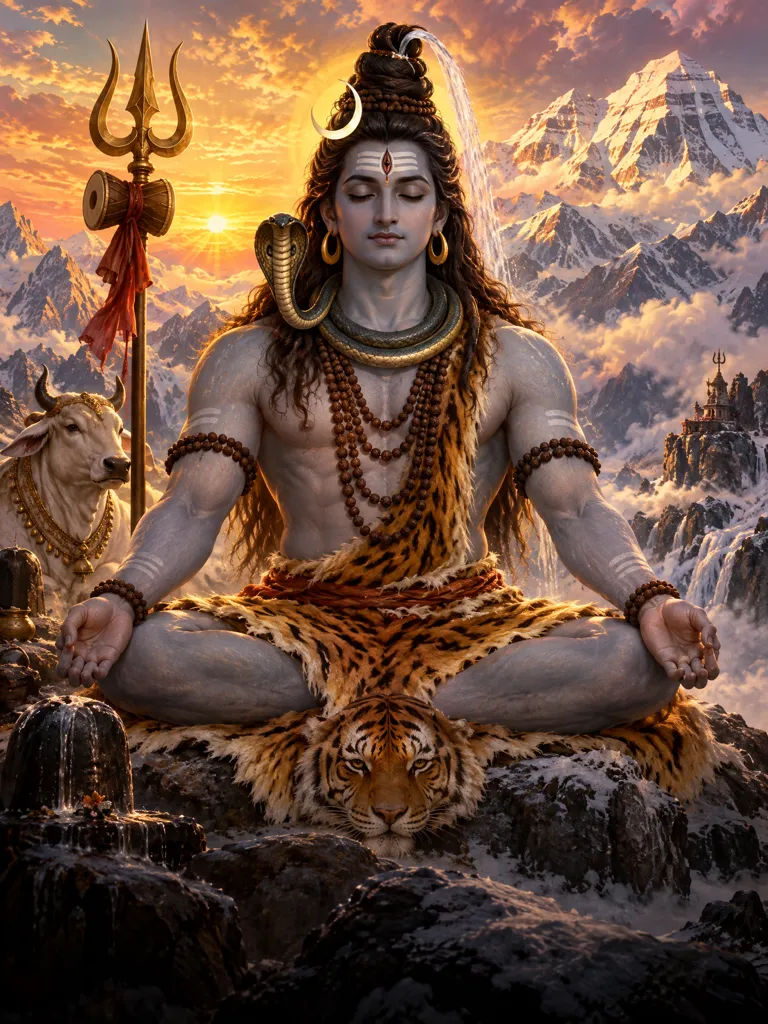
Maha Shivaratri, the Great Night of Shiva, is one of the most sacred nights in the Hindu calendar, dedicated to the worship of Lord Shiva.
Why it matters
Multiple spiritual significances: it marks the night when Shiva performed the cosmic dance of creation (Tandava), the night of the marriage of Shiva and Parvati, and the night when the formless Shiva manifested as the infinite Jyotirlinga.
Katha
The story behind it
According to the Shiva Purana, on this night Shiva manifested as an infinite pillar of light (Jyotirlinga). Brahma and Vishnu tried to find its ends — Brahma as a swan flying upward and Vishnu as a boar digging downward — but neither could find the beginning or end, establishing Shiva's supremacy as the formless infinite.
Celebrate
Rituals & traditions
How it's observed
Devotees observe a strict fast (nirjala — without water — for the most devoted). All-night vigil with Shiva worship during four praharas (watches) of the night. Shivalingas are bathed with milk, honey, and water. Bel (bilva) leaves are offered.
Traditional foods
Fasting foods: fruits, milk, sabudana preparations. After the fast: thandai, pakoras, kheer
Regional traditions
In Kashmir, Shivaratri (locally called Herath) is the biggest festival. In Nepal, Pashupatinath temple sees massive gatherings. In South India, special abhishekam in all Shiva temples.
Where to experience it
Varanasi (Kashi Vishwanath), Ujjain (Mahakaleshwar), all 12 Jyotirlinga temples, Pashupatinath in Kathmandu
Associated mantras
Om Namah Shivaya — the Panchakshari (five-syllable) mantra of Shiva
Plan your Maha Shivaratri with Debi
Puja steps, muhurat questions, stories for children: just ask.
Ask Debi about Maha Shivaratri