
March-April (Purnima of Chaitra month) or December (in some traditions)
Hanuman Jayanti
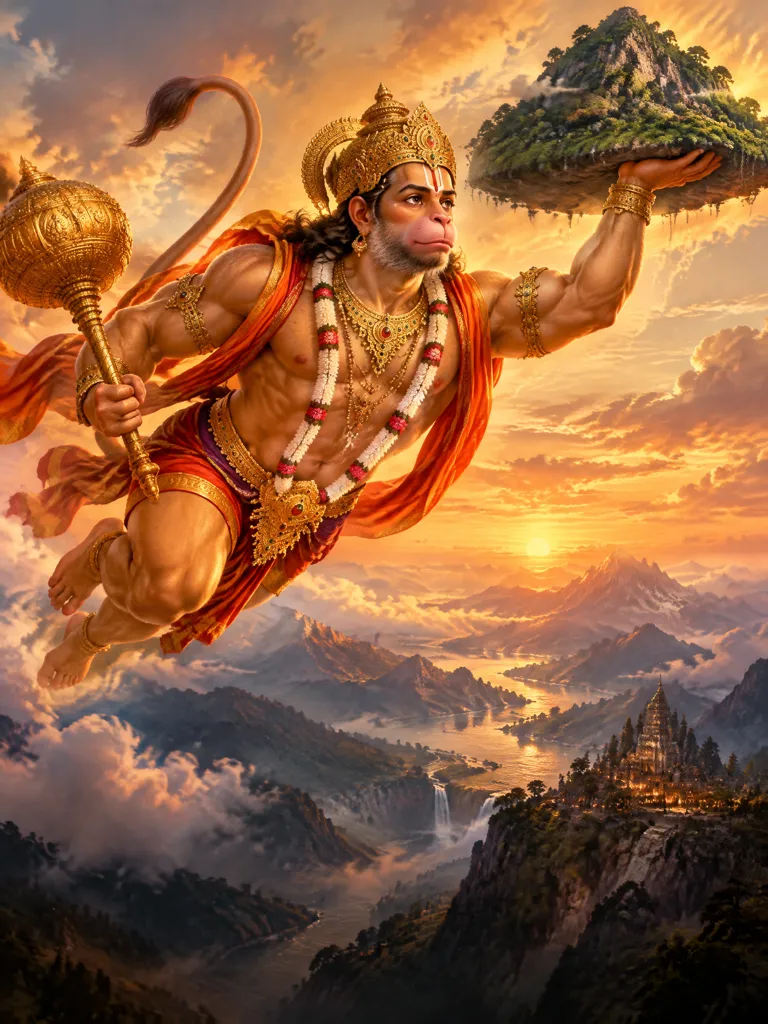
Hanuman Jayanti celebrates the birth of Lord Hanuman, the mighty devotee of Lord Rama, symbol of strength, courage, and selfless devotion.
Why it matters
Hanuman represents the ideal devotee — selfless, powerful yet humble, learned yet simple. His life teaches that true strength lies in devotion and service.
Katha
The story behind it
Hanuman is the son of Vayu (the Wind God) and Anjana. As a child, he mistook the sun for a ripe fruit and leapt to grab it. Indra struck him with a thunderbolt. Vayu, enraged, withdrew all air from the universe. The gods had to revive Hanuman and blessed him with numerous powers.
Celebrate
Rituals & traditions
How it's observed
Temples dedicated to Hanuman hold special pujas. Recitation of Hanuman Chalisa and Sundara Kanda. Offering of sindoor (vermilion) to Hanuman. Community prayers and processions.
Traditional foods
Prasad of laddu and boondi
Regional traditions
In Tamil Nadu, celebrated in the month of Margazhi (December). In North India, celebrated on Chaitra Purnima. In Karnataka and Andhra, special celebrations.
Where to experience it
Hampi — birthplace of Hanuman according to some traditions. Hanuman Garhi in Ayodhya. Mehandipur Balaji in Rajasthan.
Associated mantras
Om Hanumate Namaha; Hanuman Chalisa
Plan your Hanuman Jayanti with Debi
Puja steps, muhurat questions, stories for children: just ask.
Ask Debi about Hanuman Jayanti