
September-October (Dashami of Ashwin Shukla Paksha)
Dussehra
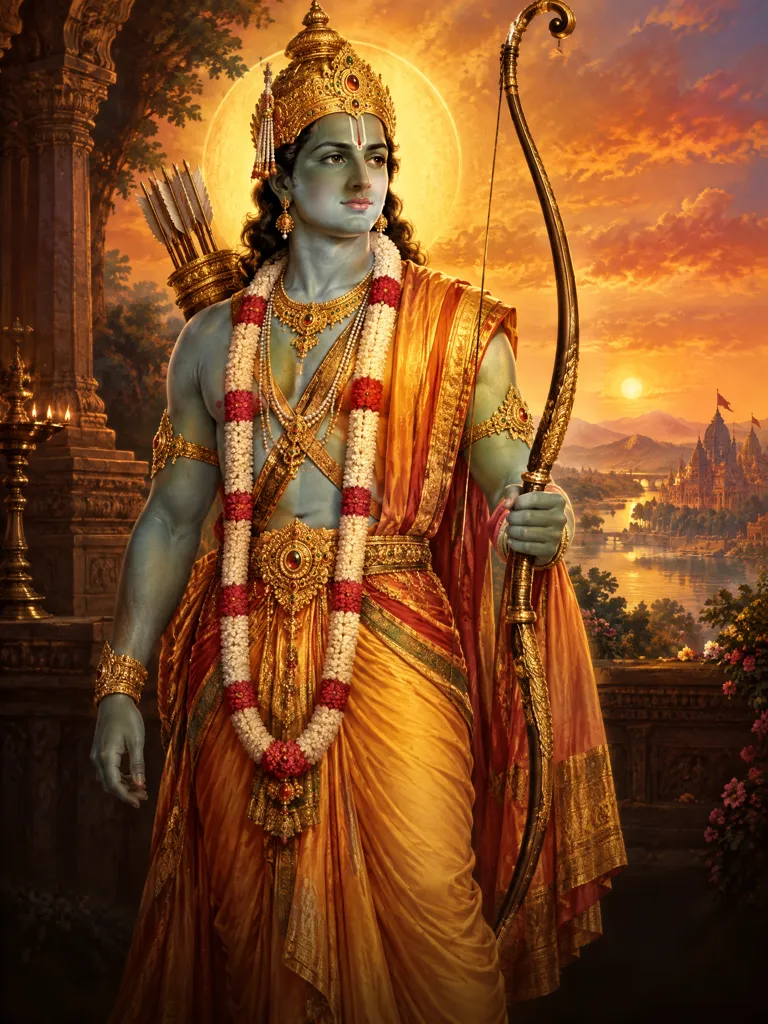
Dussehra (Vijayadashami) celebrates the victory of Lord Rama over the ten-headed demon king Ravana, and of Goddess Durga over Mahishasura. It marks the triumph of dharma.
Why it matters
The festival teaches that no matter how powerful evil becomes, righteousness ultimately prevails. The ten heads of Ravana symbolize ten evils: lust, anger, greed, attachment, pride, jealousy, selfishness, cruelty, ego, and injustice.
Katha
The story behind it
After a fierce battle, Lord Rama slew the ten-headed Ravana on this day, rescuing Sita and restoring dharma. In another tradition, Goddess Durga completed her nine-night battle against Mahishasura on this day.
Celebrate
Rituals & traditions
How it's observed
Giant effigies of Ravana, Kumbhakarna, and Meghnath are burned. Ramlila performances culminate. In South India, Saraswati and Durga are worshipped. Tools, instruments, and vehicles are ceremonially blessed (Ayudha Puja).
Traditional foods
Jalebi and fafda in Gujarat. Regional specialties across India.
Regional traditions
Mysore: famous Dussehra procession with illuminated palace. Delhi: massive Ramlila at Red Fort. Kullu: week-long international Dussehra fair. South India: Saraswati Puja and Ayudha Puja.
Where to experience it
Mysore for the royal Dussehra. Delhi Red Fort for Ramlila. Kullu Valley (Himachal Pradesh) for the unique week-long fair.
Associated mantras
Sri Rama Jaya Rama Jaya Jaya Rama
Plan your Dussehra with Debi
Puja steps, muhurat questions, stories for children: just ask.
Ask Debi about Dussehra