
January-February (Shukla Paksha Panchami of Magha)
Basant Panchami
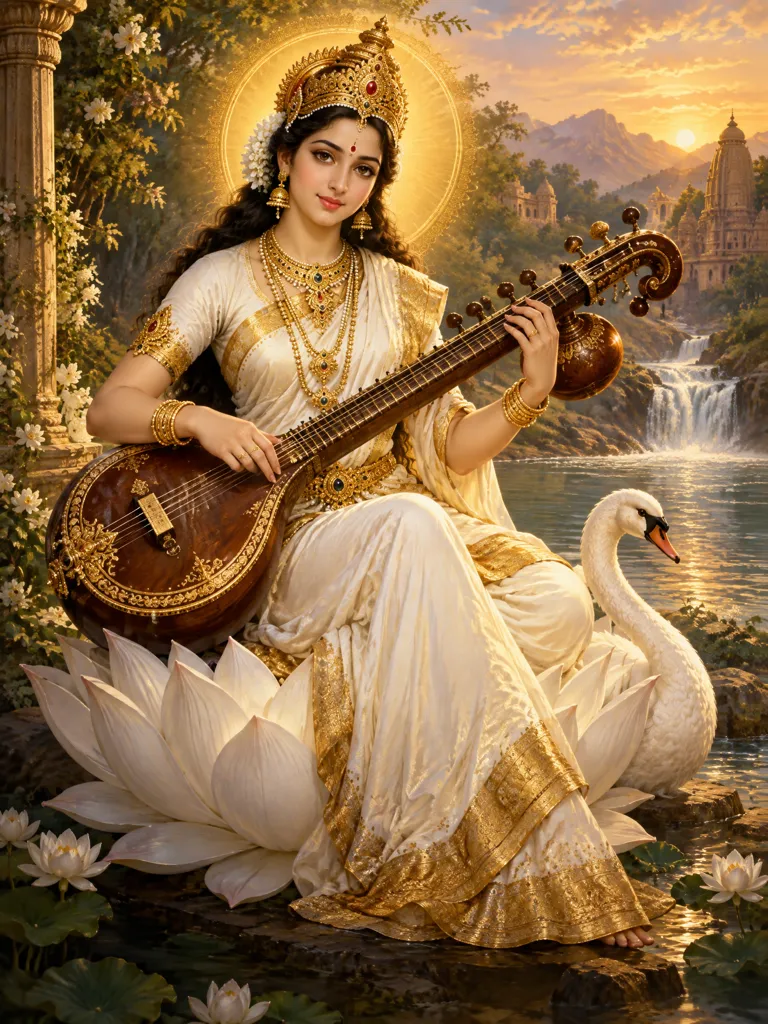
Basant Panchami (Vasant Panchami) heralds the arrival of spring and is dedicated to Goddess Saraswati, the deity of knowledge, music, and the arts.
Why it matters
It celebrates the awakening of nature and the human mind. Goddess Saraswati represents the highest form of knowledge — not just academic, but the wisdom that leads to self-realization.
Katha
The story behind it
After creating the world, Brahma felt it was lifeless and joyless. He prayed, and from his mouth emerged Goddess Saraswati, playing the veena. Her music filled the world with knowledge and creativity. Basant Panchami marks her appearance.
Celebrate
Rituals & traditions
How it's observed
Wearing yellow clothes (symbolizing the mustard fields of spring). Saraswati Puja in homes, schools, and colleges. Children are introduced to learning (Vidyarambham). Musical and artistic performances. Kite flying in some regions.
Traditional foods
Yellow foods: kesar halwa, boondi laddu, yellow rice, meethe chawal
Regional traditions
In Bengal, Saraswati Puja is a major event with pandals and processions. In North India, kite flying. In South India, Vidyarambham ceremony for children.
Where to experience it
Kolkata for grand Saraswati Puja. Schools and universities across India.
Associated mantras
Ya Kundendu Tushara Hara Dhavala, Ya Shubhra Vastra Avrita; Saraswati Namastubhyam, Varade Kamarupini
Plan your Basant Panchami with Debi
Puja steps, muhurat questions, stories for children: just ask.
Ask Debi about Basant Panchami